Tag: parenting

  • The Power of Home: Shaping Identity in a World That Wants to Deform It

    The Power of Home: Shaping Identity in a World That Wants to Deform It

    One of my mentors once told me that our deepest longing is the longing for home. I see this echoed in culture when Dorothy in The Wizard of Oz says, ‘There’s no place like home,’ and when countless décor signs repeat the simple phrase, ‘Home Sweet Home.’ When I reflect on what it means for our deepest longing to be home, I find myself drawn to the words that ultimately shape how we define it. 

    The word home can stir up different images and emotions for each of us. For some, it brings to mind warmth and acceptance. For others, it stirs memories of pain, loss, or disconnection. Many of us fall somewhere in between, where home becomes a bittersweet reality, something we love the idea of, yet the ideal of what it could be always feels just out of reach.

    This blog is written for those who want to intentionally shape what the word home means for their family. It’s an invitation to pause, reflect, and choose the values, rhythms, and memories that will define home, not just as a place, but as a living expression of who you are together.

    I asked some of my girls what the word home means to them. Here’s what they said:

    Anzi, our 9-year-old, said home is ‘a building with rooms and beds and food, somewhere our family lives.’ Avagail added, ‘the place we sleep.’ Those answers capture what a home is… but what does it feel like? Anzi described it as ‘a place you are excited to go to when you are coming home from a trip.’

    They went on to say that home is ‘safe, happy, and a place of rest.’ Maryrose shared, ‘a gathering place where my family sees each other and connects with each other.’

    Then Avagail got honest and said, ‘A place of peace and rest… well, sometimes.’ When I asked her what it is when it’s not peaceful, she laughed and replied, ‘crowded and crazy!’ (With six siblings, what else could I expect?)

    Their words capture some of what every human soul longs to find in home.

    For me, home is also the place that forms identity and equips kids to be successful adults.

    Home: Where Identity is Formed

    Evil is hunting our kids’ identity. As parents, we can’t stop the attacks, but we can prepare our children to face them. We can teach them to be wise to the enemy’s strategies and to recognize the lies for what they are. The enemy doesn’t fight fair, he fights cheap, and he would love nothing more than to twist or deform the way our kids see themselves.

    But God has a different plan. He wants our children to know deep in their hearts that they are loved, chosen, and valuable.One of our greatest honors as parents is to reflect that love, to be the echo of God’s voice in their lives. 

    When we remind them again and again who they are in Him, we are building an identity that can’t easily be shaken.** A firm identity in Christ will prepare them to face the challenges of life with courage, wisdom, and hope.

    Home: Being Equipped to Be Success Adults 

    As parents, one of the greatest gifts we can give our kids is the foundation to thrive in life. That means helping them learn discipline, not in a harsh way, but in the steady, daily choices that shape character. It means showing them that hard work is worth it, not because life is easy, but because perseverance produces fruit. It also means guiding them into healthy habits and rhythms that will carry them when life feels chaotic. 

    Beyond that, our kids need to grow in emotional intelligence, especially in how to walk through conflict with honesty and grace. Conflict will come, both in friendships and in family, and our role is to equip them with tools to handle it in a way that leads to reconciliation instead of resentment. 

    Home is the place where they begin practicing emotional intelligence, learning how to manage their feelings, notice the emotions of others, and move through conflict in a way that strengthens relationships rather than breaking them down. Home is the training ground where these lessons take root. If they can practice these things here, in the safety of family, they’ll be prepared to live them out in the world.

    Rhythms is what establishes these 

    What do I want formed in my kids? That’s a question I come back to often, because the answer helps shape the rhythms of our home. If I don’t stop and ask that question, it’s too easy to drift into survival mode, just hoping to get through the day instead of intentionally forming the kind of men and women we want to send into the world. One of the rhythms I’ve found most important is affirmation, parents choosing to speak identity over their kids. Our children need to know who they are and whose they are. That means calling out their strengths, celebrating the things they do well, and naming the good we see in them. But it also means not glossing over their weaknesses. When we affirm them truthfully, we give them both courage and humility.

    Another rhythm we lean into is character development. As Charlotte Mason reminds us, “The habits of the child produce the character of the man.” Habits become patterns, and patterns become identity. That’s why we can’t just hope character shows up later, it has to be formed in the little, daily practices now. Hard work is part of this. Our kids need to learn how to keep going even when they don’t feel like it. Sometimes that looks like finishing chores for no other reason than they need to be finished. Sometimes it’s pushing through with schoolwork or responsibilities when their emotions are telling them to quit. That simple lesson, “do it anyway,” forms grit that will serve them for the rest of their lives.

    We also want to cultivate rhythms of creativity. Children discover who they are when they have the freedom to explore their own interests and abilities. Too often, parents push kids into sports or activities they themselves like, without paying attention to what really fits the child’s personality, body, or spirit. What if your son’s soul comes alive on a rock-climbing wall more than on a baseball field? What if your daughter’s joy is found in painting rather than in soccer? That means giving them margin, especially free time that isn’t dominated by devices, so they can actually get bored enough to create, imagine, and step into something new.

    All of this comes back to family rhythms. When we establish rhythms of affirmation, character, hard work, and creativity, we are intentionally shaping identity instead of leaving it up to chance. These aren’t just chores or routines; they are seeds planted deep in the soil of who our children are becoming. And someday, those seeds will bear fruit in the way they live, love, and serve in the world.


    ** Our kids, like all of us, need to come to personal faith in Christ. They must believe in their hearts and confess with their mouths in order to be children of God (Romans 10:9–10). Until that moment of faith, they are still deeply loved, valuable, and made in God’s image. This truth reminds us that while salvation is always God’s work, our role as parents is to point them to Jesus, pray for their hearts, and model the kind of faith we hope they will one day make their own.


    Reflection:

    What qualities do you most want to see formed in your kids?

    What influences are currently shaping those qualities in them, for better or worse?

    What things might you need to remove or adjust to make space for healthy growth?

    What new rhythms could you begin putting in place to form what matters most?

    Posts

  • Love and Order: An Essential Balance for Building a Thriving Family Culture

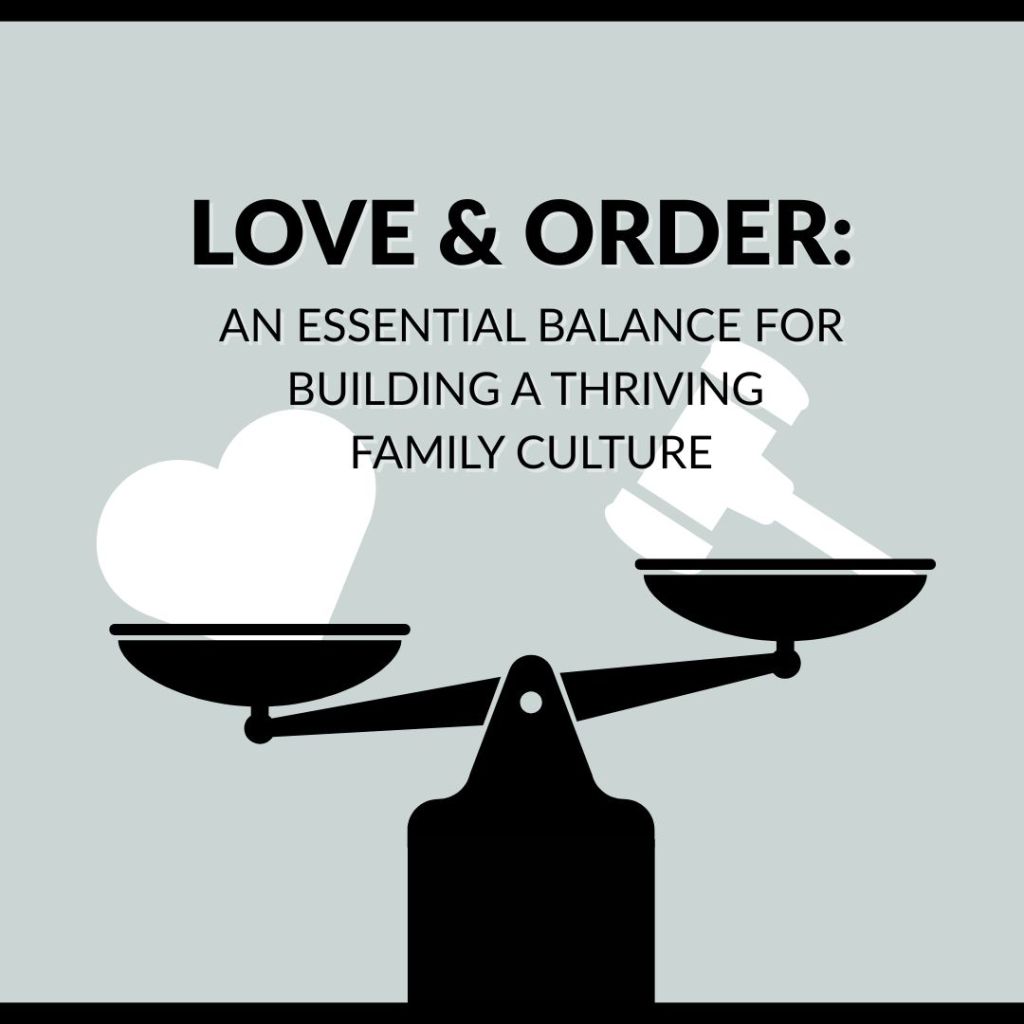
    Love and Order: An Essential Balance for Building a Thriving Family Culture

    There’s something sacred about those early days of parenting. The house is full of wonder. You’re all in—fully present and full of anticipation for the person your beautiful baby will one day become. You are set to parent with intentionality.  You are doing the small things that you believe are going to help shape their sense of identity. You speak gentle words of wisdom over your one-year-old kid while buckling them into the car seat. Maybe you’ve already taken them on their first fishing trip, or proudly introduced them to your favorite pour-over coffee shop. You are striving to make every moment feel purposeful and full of meaning.

    But somewhere between that adorable first birthday and the chaos of toddlerhood, something shifts.

    Suddenly, your sweet little kid discovers they have a will. A strong one. And it seems to rise up without warning. Between age three and five, that once-loving home starts to feel like a battleground. You and your spouse find yourselves trying to renegotiate authority—as if the throne of parental leadership has been quietly overthrown by a pint-sized revolutionary in Paw Patrol pajamas.

    Parenting is one of the most rewarding but also challenging tasks in life. As parents, we aim to shape our children into thriving adults who are confident, compassionate, and capable of navigating the complexities of the world. 

    However, the journey of parenting involves much more than simply providing for physical needs; it requires intentionality, wisdom, and a solid foundation in both love and order. These two elements—mutual love and respect, and Godly order—are essential pillars in creating a healthy family culture where both parents and children can thrive. In this article, we will explore how these principles can help build a family that grows closer together while fostering an environment of trust, growth, and success. (This article is part of the Building A Healthy Family Culture series – Read part 1 here).

    Mutual Love and Respect: The Foundation of Healthy Leadership

    (This applies to all types of leadership—not just in the home—but that’s a topic for another article)

    In many cultures, leadership is often viewed as a top-down, authoritarian structure. The leader gives orders, and those beneath them obey. This often can be cold, impersonal and even dehumanizing. While this might work in certain contexts, it is not the best model for parenting. Instead, leadership within the family should be based on mutual trust, love, and respect. A healthy family dynamic thrives on collaboration and understanding, with both parents and children acknowledging each other’s value.

    In leadership, trust is key. Leadership should not be seen as a dictatorship but as a relationship built on mutual respect. Whether in a workplace or in the home, good leadership does not operate in isolation; it invites cooperation and communication. When trust is established, it fosters an environment where both parties can thrive and grow. Parenting should be no different.

    As parents, it is essential to treat our children with respect and dignity. They are human beings with the ability to understand, process, and grow. Far too often, children are treated as if they are incapable of understanding the world around them, which leads to miscommunication and a lack of mutual respect.

    A Green Thumb Lesson: What Plants Teach Us About Parenting

    Katrina and I both don’t have a green thumb. Every plant that’s come into our lives has ended up shriveled and dry. But our oldest daughter, Shalom, has taken an interest in botany. Last time she counted, she had over 50 plants scattered around the house.

    A mentor of mine once used the analogy of a thriving plant: for a plant to grow, it needs an environment that nurtures growth. Kids need the same—love and safety to grow into thriving adults.

    Every plant has basic needs like sunlight, water, and good soil.

    Children thrive when their basic needs for sleep, nutrition, safety, and connection are consistently met. These foundational needs create a sense of stability that lets their hearts and minds grow with confidence. When we prioritize their physical and emotional well-being, we give them the security they need to explore, learn, and relate to others in healthy ways.

    When I asked Shalom how she does such a good job caring for plants, she said, “It depends on what kind of plant you’re talking about. If the leaves are yellow, you’re watering it too much. If they’re droopy, you’re not watering enough.” Simple but profound. There are basic needs—but the way those needs are met depends on the plant.

    That’s exactly how parenting works. To create a place where kids can grow into thriving adults, we need to understand their individual needs and be attentive to when they need more or less of something.

    Each child is wired differently, with unique temperaments, sensitivities, and ways they experience love. Learning who they are—what calms them, what excites them, and what challenges them—helps us respond with wisdom, not a one-size-fits-all approach. When we adjust how we parent to meet their individual needs, we build a home where they feel seen, safe, and free to become who they were made to be.

    Parenting also means paying close attention to the signs that something isn’t working. Meltdowns, withdrawal, or constant testing often point to needs that aren’t being met. Sometimes kids need more structure, connection, or rest—and other times, they need less stimulation, pressure, or freedom. When we slow down and notice these signals, we can adjust how we respond to better support their growth and well-being.

    The Tension Between Nurture and Order

    Mutual love and respect are also about understanding the role children play in the family dynamic. They are not passive participants but active members of the family system. By teaching them the importance of respect and love for others, we are helping them develop emotional intelligence and social awareness. As parents, we need to aim to build a culture in the home that encourages healthy communication, empathy, and self-awareness.

    However, there is a risk in leaning too heavily into mutual love and respect without also establishing boundaries. If you are like me, in an attempt to create an environment of trust and love, it can be easy to inadvertently fall into the trap of over-accommodating your children’s desires, leading to a lack of order and structure in the home. 

    In the name of love, we start making little compromises. We let things slide, give in to tantrums, or avoid hard conversations—telling ourselves it’s just a phase, or that connection matters more than correction. And while our hearts are in the right place, a subtle shift begins to take root. Without realizing it, the pursuit of a warm, nurturing environment starts to come at the cost of order and consistency. The home is still full of affection, but even in these early years, it can become marked by power struggles, unmet expectations, and constant negotiation.

    Eventually, the absence of order can become so exhausting that we swing in the opposite direction—toward fear, control, and rigid authority. What began as a pursuit of connection now feels like a fight to regain control. But the goal isn’t to rule the home with an iron fist, nor is it to let our kids run the show—it’s to create an environment where children feel loved, valued, and secure within healthy boundaries.

    Godly Order: Leading with Purpose and Authority

    Love and respect are the heart of any strong family, but having a sense of order helps things run smoothly. Parenting isn’t just about caring deeply for our kids—it’s also about leading them well. Our job is to help them grow into responsible, respectful, and faith-filled people. Just like our walk with God includes both love and trust in His authority, parenting involves that same mix of care and guidance.

    The concept of “order” in the home is rooted in the understanding that God has entrusted parents with the responsibility of raising children in a way that honors Him. This includes not only providing for their physical and emotional needs but also teaching them about God’s ways and establishing boundaries that promote growth and understanding. Katrina and I explain this idea using a biblical principle we call “Godly Order.”

    God didn’t create the world randomly—He created it with purpose and order. In Genesis 1, we read that the earth was formless and empty, but as God spoke, order began to take shape. We see that order all throughout creation. One important part of that order is how we understand authority, especially in parenting. Authority and obedience aren’t about control—they’re about love and respect.

    Think about our relationship with God. Can we tell Him what to do? Of course not. But can He tell us what to do? Absolutely. Still, He’s not distant—He invites us to come to Him, to ask, to seek, and to speak freely. That’s the kind of relationship we want to model with our kids.

    An important aspect of Godly order is the ability to say “no” when necessary. In the same way that God sets boundaries for us, parents must also establish boundaries for their children. This can sometimes be difficult, especially when children test limits, but it is essential for their development. Teaching children that “no” means “no” helps them learn to respect authority and understand that there are consequences to their actions. This structure creates a safe environment where children can thrive because they know their boundaries, and they can trust that their parents will keep them safe.

    In the same way that we’re called to honor and obey God, parents are meant to model that same kind of respect for authority in their own lives. When children see us submitting to God’s guidance, it helps them understand why they’re called to listen and obey as well. One practical way to teach this is by explaining that just as we can’t tell God what to do—but we can ask Him—our kids can’t demand things from us, but they can ask. Sometimes God answers yes, and sometimes He doesn’t. It’s the same with parents. This simple truth teaches both humility and trust, and it mirrors the way God invites us into relationship with Him.

    Sadly, many homes today lack this kind of intentional structure. When kids are in charge and parents hesitate to set boundaries, it often leads to confusion, stress, and even conflict. But when parents lead with purpose and love—creating clear expectations and healthy limits—children feel more secure. They learn to trust their parents, which helps them grow in confidence and respect. It also prepares them to live well in the world, where authority figures like teachers, coaches, and bosses will be part of their everyday lives.

    Balancing Love, Respect, and Order in Parenting

    The relationship between love and order is a delicate balance. When we focus too much on love and respect without setting clear boundaries, we risk creating a home without structure, which can lead to confusion and insecurity. On the flip side, if we emphasize Godly order without a foundation of love and respect, it can create a culture of fear and rebellion—where children follow the rules but miss the heart behind them.

    The key to a thriving family culture is weaving both love and order into everyday parenting. When children feel deeply loved and respected and know there are clear, consistent boundaries, they learn to value both relationships and responsibility. This kind of environment helps them grow into confident, compassionate, and wise adults who can navigate life well.

    ((Kids don’t stay the same, and neither should our parenting. As they grow through different stages, our approach has to grow with them. We’re in the process of writing down what we’ve been learning along the way – more articles to come))

  • Love Built on Trust: Rebuilding the Foundations of Our Relationship

    Love Built on Trust: Rebuilding the Foundations of Our Relationship

    One night, Katrina and I found ourselves in the middle of one of those arguments. You know, the kind where you’re trying to clean the house and fold laundry, but the tension between you makes it almost impossible to focus on anything else. As we went through the motions, Katrina, sitting on the floor in the doorway to our closet, said something that pierced me straight to the core: “Robby, I can’t trust you.” (This article is part of the Building A Healthy Family Culture series – Read part 1 here).

    At that moment, time seemed to freeze. We were nine years into marriage, and I had always thought we had a pretty solid relationship. What was happening? How had we reached this point?

    Trust: The Core of Every Great Relationship

    In 2014, our church went through a series of books by Patrick Lencioni, a leadership expert and author of several business books, that outline a framework for building a healthy team culture. His insights have shaped the way I view relationships, particularly in ministry and marriage. One key concept he emphasizes is that every great team is built on a foundation of trust. Whether in a nonprofit, a sports team, or a corporate setting, trust enables teams to go further, faster. The same is true in marriage—trust is the foundation on which everything else is built. Without it, deep connection, understanding, and fulfillment become much harder to achieve. 

    But here’s the catch: trust doesn’t just happen. It takes intentional effort to build, and even more effort to rebuild when it’s broken.

    Building Trust: The Core of Healthy Conflict

    When trust is strong, it creates a safe space for deep connection and courageous conversations. But when trust fractures, even the most constructive conversations can slip into unhealthy conflict. God uses marriage, and all relationships, to grow us and form Christ in us. If the foundation of trust is not secure, it becomes harder to navigate issues that arise in a healthy way.

    I’ve written before about the importance of staying away from “false harmony” (Lencioni’s term), and how it can mask underlying issues. It’s easy to pretend everything is fine, but without trust, this facade can quickly crumble when conflict arises. Healthy conflict is not about avoiding tough conversations, but about addressing them with honesty, vulnerability, and respect. This is the trust we need to rebuild.

    The Sobering Reality: Trust Will Be Broken

    Here’s the sobering truth: trust will be broken at some point in every relationship. You may not face a “level 10 betrayal,” but as long as you’re two humans full of flesh and pride, there will be moments where trust is fractured. And that’s okay—as long as you don’t leave it unattended.

    The key is how you respond. Are you willing to face the hurt, address the issue, and work through it together? Trust is a living, breathing thing—it requires constant care and attention.

    Evaluating Trust: Are There Fractures?

    One of the ways to evaluate the health of your trust is to ask: What areas in our relationship are we anxious about having conversations? These are often the areas where trust has been broken or left unaddressed.

    During that argument with Katrina, when she said, “I can’t trust you,” something shifted in me. Out of nowhere (completely by the grace of God), I said, “Well, I guess we’ll just have to build trust then!” I didn’t know exactly what I was committing to, but I felt a resolve in my heart that we needed to rebuild. When I said yes, I had no idea what I was truly getting myself into.

    Rebuilding Trust: Our Journey

    For the next three months, Katrina and I dedicated ourselves to building trust from the ground up. We started by identifying every area where we felt hesitant to talk about. We made a list of nine areas—parenting, finances, sex, housekeeping, and more. Some of those areas felt discouraging to acknowledge. How had we arrived at this point? But we were determined to rebuild, and that was the first step toward healing.

    Through countless honest and vulnerable conversations, we slowly began to rebuild. Many of these talks were painful, as I had to face how my actions—or lack of action—had fractured the foundation of our relationship. Some of these conversations were filled with tears, but each one demanded our fierce commitment to humility and radical ownership. 

    Over time, our foundation grew stronger. We realized that rebuilding trust isn’t just about fixing specific issues; it’s about fostering a new level of transparency, vulnerability, and mutual respect.

    Moving Forward: The Power of Trust

    Today, our marriage is stronger because we’ve taken the time to rebuild trust. It didn’t happen overnight, and it took intentional effort. But that effort has allowed us to engage in healthier, more honest conversations. We’re better equipped to navigate conflicts with grace, knowing that we have each other’s backs and that trust is at the center of it all.

    Trust, like any core principle, needs constant care. It can’t be taken for granted. But when you intentionally nurture it, it becomes the foundation of everything else in your relationship. And when trust is strong, everything else becomes easier—communication, connection, and even conflict become more manageable.

    If you’re facing fractures in your own core of trust, know that it’s possible to rebuild. It starts with a willingness to acknowledge the issues, have those difficult conversations, and commit to the process of healing. Trust can be restored, and when it is, the depth of your relationship will grow stronger than ever.

    The core of trust is essential for a thriving relationship, whether in marriage, friendships, or any other connection. It takes effort to build, and it requires even more effort to rebuild when broken. But with patience, intentionality, and grace, you can restore trust and create a foundation that supports deep connection, meaningful conversations, and healthy conflict. Trust is not a one-time thing—it’s a continuous journey that, when nurtured, leads to stronger, more fulfilling relationships.

    Prayer: Lord, please give me discernment to recognize where trust may be broken in my relationships. Grant me the courage to have open and honest conversations, and help me face the painful truths with humility, vulnerability, and a deep commitment to rebuilding trust. Restore what has been fractured by Your grace, and may Your love be the foundation that guides me toward deeper connection, honesty, and mutual respect. In Jesus’ name, we pray. Amen.

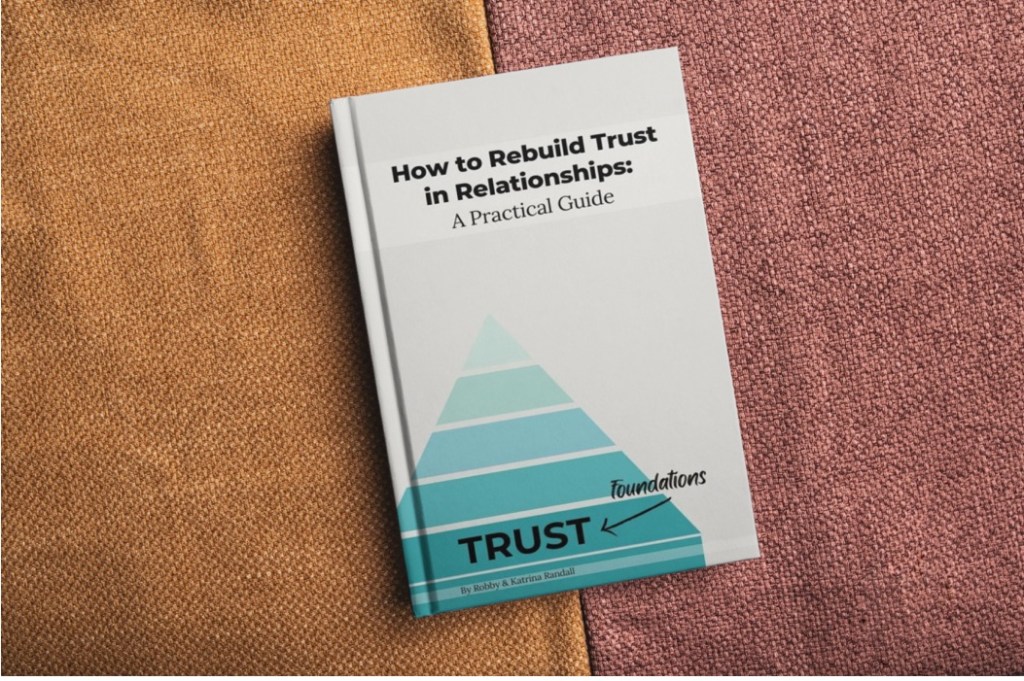
    (Possible next step: Katrina and I put together a FREE downloadable guide to rebuilding trust that you can check out here) 


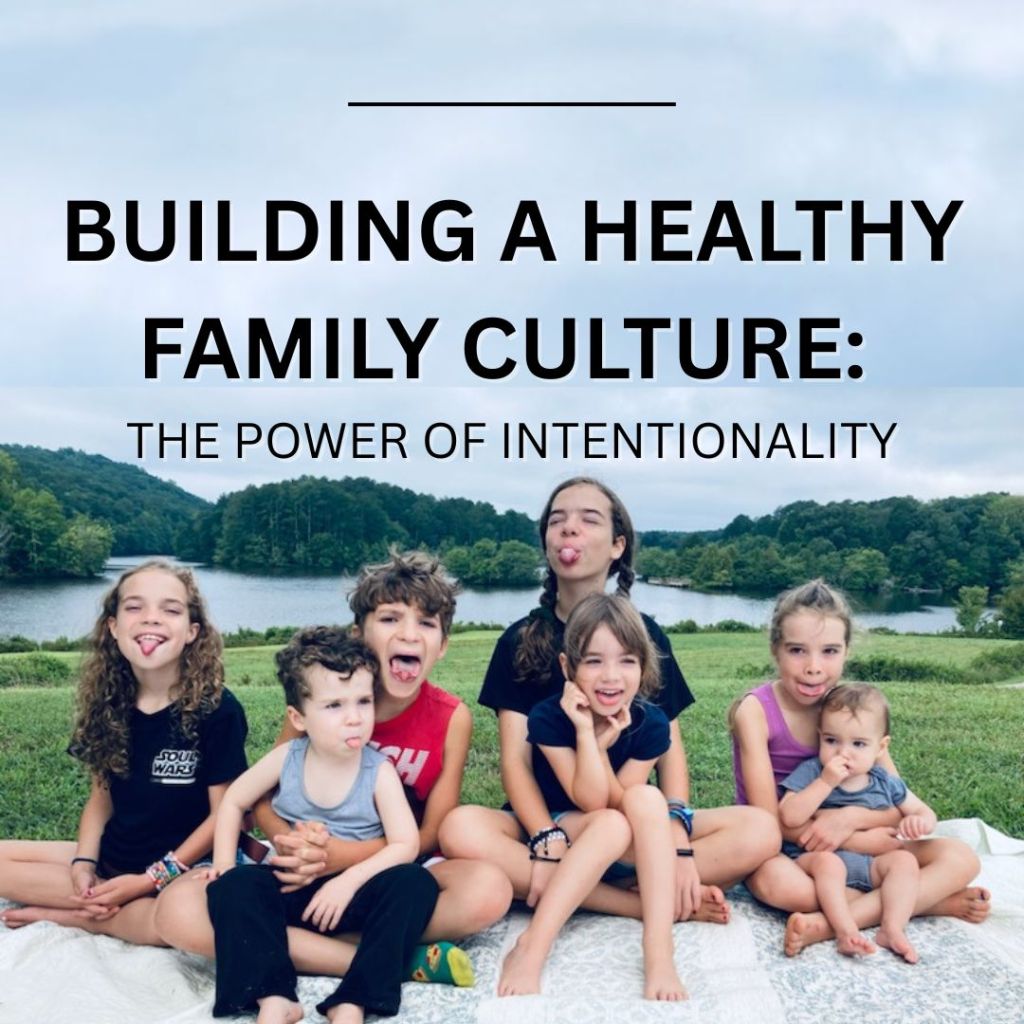
  • Building a Healthy Family Culture: The Power of Intentionality

    Building a Healthy Family Culture: The Power of Intentionality

    Have you ever walked into someone’s home and immediately felt something intangible—the warmth, the unity, the sense of belonging? 

    I know I have! I remember when Katrina and I first started having kids, we visited a family from our church. As we walked into their home, they were just finishing a family prayer time. Though their children were young, it was clear that each of them had a deep reverence for the Lord and for prayer. They said “Amen” and warmly welcomed us in.

    Throughout the evening, we observed the rich culture of their family. Their two young sons responded to me with a respectful “yes, sir” each time we spoke. Their daughters attentively engaged with our kids, allowing the adults to connect. At dinner, they held hands, prayed together, and then sang a beautiful song of worship and gratitude. Katrina and I were in awe.

    This type of family culture does not happen by accident. It’s the result of a family culture that has been cultivated over time, either intentionally or passively. Every home has a culture, whether you realize it or not. The question is: Are you shaping yours with purpose, or are you letting it form by default?

    This blog is the first in a series on Building a Healthy Family Culture. In this post, we’re starting with the foundation: Intentionality.

    A Family Culture is a Combination of What You Make Happen and What You Allow to Happen

    Family culture isn’t built overnight. It’s the result of small, consistent decisions—what you prioritize, how you handle conflict, the tone of your conversations, and even the rhythms of daily life. Some of these elements are things you deliberately set in motion, while others creep in simply because they weren’t actively addressed.

    For example, if you make a habit of eating dinner together, having deep conversations, and praying as a family, you’re intentionally shaping a culture of connection and faith. On the other hand, if screen time slowly takes over family interactions, or if busyness keeps everyone moving in different directions, a culture of disconnection forms—whether you meant for it to or not.

    Your family culture is happening right now. The question is: Is it forming into the culture that you want?

    The Danger of Passivity

    The truth is, if you’re not actively building your family culture, something else is doing it for you—whether it’s external influences like media and peers or simply the natural drift of life’s demands. Without intention, it’s easy to fall into patterns that don’t align with your values.

    • Maybe conflict in your home tends to escalate rather than resolve, and that pattern is becoming the norm.
    • Maybe gratitude isn’t modeled often, and complaining has taken root.
    • Maybe busyness has replaced quality time, and relationships feel distant.

    Passivity isn’t neutral—it’s the open door through which unhealthy patterns enter and take residence. The good news? A culture left to chance can be reshaped through intentional effort.

    Considering the Long-Term Outcomes

    It’s easy to get caught up in the immediate chaos of parenting—the endless laundry, the sibling squabbles, the looming deadlines. But family culture isn’t just about today. It’s about the legacy you’re building.

    Take a step back and ask:

    • What kind of adults do I want my children to become?
    • What memories do I want them to carry from their childhood?
    • What values do I want deeply rooted in our home?

    Your answers to these questions should shape how you parent today. Yes, the stresses of the moment are real, but when you zoom out to the bigger picture, you’ll realize that every decision—how you discipline, how you speak to one another, how you spend your time—is contributing to the family culture that will define your children’s upbringing.

    Defining the Objective of Family

    If you want to be intentional about your family culture, you need to define what you’re aiming for. A vague sense of “wanting a good family” isn’t enough. What does a healthy family culture look like for you?

    Here are three key objectives worth considering:

    Offering God a Pleasant Aroma

    In Scripture, we see the idea of our lives being a “fragrant offering” to God (2 Corinthians 2:15, Ephesians 5:2). This applies to families as well. When our homes reflect love, peace, forgiveness, and faithfulness, they become a place where God is honored—not just in name, but in daily reality.

    Does your home reflect His presence? Do your interactions point your children toward Him? A family culture that prioritizes God isn’t perfect, but the way we build it—through love, grace, and faith—becomes a fragrant offering to Him. When we seek Him in both our successes and struggles, our home becomes a place where His presence is not just acknowledged, but welcomed. 

    The way we live and the culture we cultivate in our homes can rise like a sweet aroma to the Lord, bringing Him joy. Building an intentional family culture around Gospel-centered principles isn’t just beneficial for our children—it is an act of worship that pleases God.

    Long-Term Connection

    The relationships within a family should be built to last. It’s easy to assume that just because you live together now, you’ll stay connected forever—but relationships require ongoing investment.

    How do you cultivate long-term connection? (This isn’t an exhaustive list, but these are some topics. I’ll be writing about in this series)

    • Open and Vulnerable Hearts: A thriving family culture begins with hearts willing to be seen, known, and loved without fear of rejection.
    • Love Built on Foundations of Trust: Genuine love flourishes when trust is consistently nurtured through honesty, reliability, and faithfulness.
    • Love & Order: Kids cannot run a family, and parents are not meant to be cold-hearted dictators. A healthy family thrives when mutual love and respect are paired with Godly order, where parents lead with selfless love while teaching children to respect authority. This balance creates a strong family culture that nurtures growth and allows both parents and children to flourish.

    • Confession and Repentance: A healthy home embraces humility, where admitting wrongs and seeking forgiveness restores relationships and reflects God’s grace.
    • Courageous Conversations: True connection is built through honest, grace-filled discussions that address challenges, deepen understanding, and strengthen bonds.

    • Discipleship Through Family Rhythms: Building a family culture is all about discipleship. The Holy Spirit is trying to form Christ and us as parents and in our children. This can happen in isolated moments, but it has exponential power when we we spiritual practices into our family culture. 

    The goal isn’t just to raise children who respect you as parents, but to foster lifelong relationships where love, trust, and genuine friendship remain long after they leave home.

    Empowering Kids to Be Successful Adults

    Parenting is ultimately about preparing children for the world beyond your home. Success isn’t just about academics or career paths—it’s about character, responsibility, and emotional resilience. Your children won’t stay under your roof forever, but the culture you create now will shape the kind of people they become. The daily habits, values, and relationships they experience in your home will serve as a foundation for how they navigate life’s challenges. By intentionally building a home centered on faith, love, and wisdom, you equip them to thrive long after they leave.