One night, Katrina and I found ourselves in the middle of one of those arguments. You know, the kind where you’re trying to clean the house and fold laundry, but the tension between you makes it almost impossible to focus on anything else. As we went through the motions, Katrina, sitting on the floor in the doorway to our closet, said something that pierced me straight to the core: “Robby, I can’t trust you.” (This article is part of the Building A Healthy Family Culture series – Read part 1 here).
At that moment, time seemed to freeze. We were nine years into marriage, and I had always thought we had a pretty solid relationship. What was happening? How had we reached this point?
Trust: The Core of Every Great Relationship
In 2014, our church went through a series of books by Patrick Lencioni, a leadership expert and author of several business books, that outline a framework for building a healthy team culture. His insights have shaped the way I view relationships, particularly in ministry and marriage. One key concept he emphasizes is that every great team is built on a foundation of trust. Whether in a nonprofit, a sports team, or a corporate setting, trust enables teams to go further, faster. The same is true in marriage—trust is the foundation on which everything else is built. Without it, deep connection, understanding, and fulfillment become much harder to achieve.
But here’s the catch: trust doesn’t just happen. It takes intentional effort to build, and even more effort to rebuild when it’s broken.
Building Trust: The Core of Healthy Conflict
When trust is strong, it creates a safe space for deep connection and courageous conversations. But when trust fractures, even the most constructive conversations can slip into unhealthy conflict. God uses marriage, and all relationships, to grow us and form Christ in us. If the foundation of trust is not secure, it becomes harder to navigate issues that arise in a healthy way.
I’ve written before about the importance of staying away from “false harmony” (Lencioni’s term), and how it can mask underlying issues. It’s easy to pretend everything is fine, but without trust, this facade can quickly crumble when conflict arises. Healthy conflict is not about avoiding tough conversations, but about addressing them with honesty, vulnerability, and respect. This is the trust we need to rebuild.
The Sobering Reality: Trust Will Be Broken
Here’s the sobering truth: trust will be broken at some point in every relationship. You may not face a “level 10 betrayal,” but as long as you’re two humans full of flesh and pride, there will be moments where trust is fractured. And that’s okay—as long as you don’t leave it unattended.
The key is how you respond. Are you willing to face the hurt, address the issue, and work through it together? Trust is a living, breathing thing—it requires constant care and attention.
Evaluating Trust: Are There Fractures?
One of the ways to evaluate the health of your trust is to ask: What areas in our relationship are we anxious about having conversations? These are often the areas where trust has been broken or left unaddressed.
During that argument with Katrina, when she said, “I can’t trust you,” something shifted in me. Out of nowhere (completely by the grace of God), I said, “Well, I guess we’ll just have to build trust then!” I didn’t know exactly what I was committing to, but I felt a resolve in my heart that we needed to rebuild. When I said yes, I had no idea what I was truly getting myself into.
Rebuilding Trust: Our Journey
For the next three months, Katrina and I dedicated ourselves to building trust from the ground up. We started by identifying every area where we felt hesitant to talk about. We made a list of nine areas—parenting, finances, sex, housekeeping, and more. Some of those areas felt discouraging to acknowledge. How had we arrived at this point? But we were determined to rebuild, and that was the first step toward healing.
Through countless honest and vulnerable conversations, we slowly began to rebuild. Many of these talks were painful, as I had to face how my actions—or lack of action—had fractured the foundation of our relationship. Some of these conversations were filled with tears, but each one demanded our fierce commitment to humility and radical ownership.
Over time, our foundation grew stronger. We realized that rebuilding trust isn’t just about fixing specific issues; it’s about fostering a new level of transparency, vulnerability, and mutual respect.
Moving Forward: The Power of Trust
Today, our marriage is stronger because we’ve taken the time to rebuild trust. It didn’t happen overnight, and it took intentional effort. But that effort has allowed us to engage in healthier, more honest conversations. We’re better equipped to navigate conflicts with grace, knowing that we have each other’s backs and that trust is at the center of it all.
Trust, like any core principle, needs constant care. It can’t be taken for granted. But when you intentionally nurture it, it becomes the foundation of everything else in your relationship. And when trust is strong, everything else becomes easier—communication, connection, and even conflict become more manageable.
If you’re facing fractures in your own core of trust, know that it’s possible to rebuild. It starts with a willingness to acknowledge the issues, have those difficult conversations, and commit to the process of healing. Trust can be restored, and when it is, the depth of your relationship will grow stronger than ever.
The core of trust is essential for a thriving relationship, whether in marriage, friendships, or any other connection. It takes effort to build, and it requires even more effort to rebuild when broken. But with patience, intentionality, and grace, you can restore trust and create a foundation that supports deep connection, meaningful conversations, and healthy conflict. Trust is not a one-time thing—it’s a continuous journey that, when nurtured, leads to stronger, more fulfilling relationships.
Prayer: Lord, please give me discernment to recognize where trust may be broken in my relationships. Grant me the courage to have open and honest conversations, and help me face the painful truths with humility, vulnerability, and a deep commitment to rebuilding trust. Restore what has been fractured by Your grace, and may Your love be the foundation that guides me toward deeper connection, honesty, and mutual respect. In Jesus’ name, we pray. Amen.
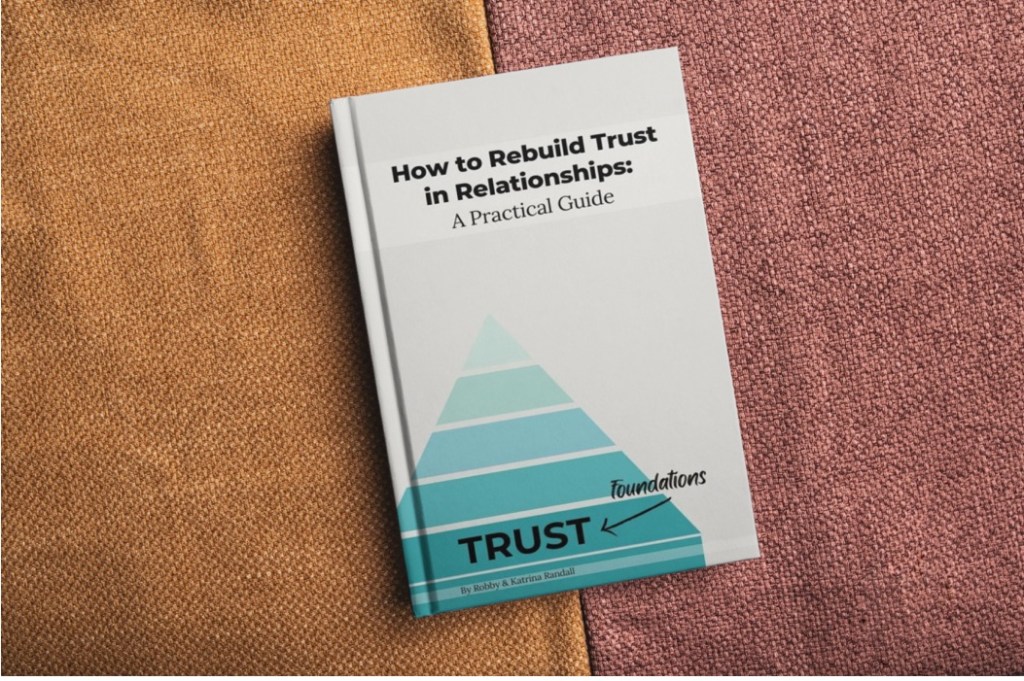
(Possible next step: Katrina and I put together a FREE downloadable guide to rebuilding trust that you can check out here)