Tag: god

  • Becoming an Intentional Father

    Becoming an Intentional Father

    Fathers! God has entrusted you with something incredibly special, something sacred. He has placed in your hands the stewardship of His image: first, by forming His image-bearers (yes, those wild kids of yours), and second, by living as an image-bearer yourself, revealing and representing Him to your family.

    And beyond that, you’re responsible for shaping a family culture of humility, love, and a shared vision compelling enough to keep your children connected and anchored. This assignment is weighty and beautiful, and it’s far too big to carry alone. You need loyal comrades beside you, men who strengthen, support, and walk with you.

    Will you respond to the call?

    1. Knowing God as a Good Father

    Before we can father with clarity and confidence, we have to settle something deep in our own hearts: Who is God as Father? Intentional fatherhood begins with a biblical conviction that God does not simply act like a Father—He is a Father in His very nature. Scripture consistently reveals a God who guides, corrects, protects, and delights in His children. If we want to lead our families well, we must let this truth reinterpret every other picture of fatherhood we’ve inherited.

    But knowing God as Father is more than theology: it’s experiential. It means choosing to live as a beloved son, not a spiritual orphan scrambling for worth. It’s allowing God to father us in our weakness, our confusion, and even our immaturity. Luke 15 gives us a powerful window into this reality: both sons were lost, not because of their behavior, but because neither was living as the beloved. Intentional fatherhood grows in the soil of being parented by God ourselves.

    (Recommended book: If you’re longing to know God as a Father in a deeper way, I highly recommend Fathered by God by John Eldredge. He lays out the stages of the masculine journey and how God walks with us, fathering us, through each one.)

    Pause:

    On a scale from secure to insecure, how would you rate your experience of living as a beloved son, letting God father you, shape you, and speak identity into you?

    What is one practical step you can take this week to grow in knowing God as your Father?

    2. The Purpose of Fatherhood

    Psalm 8 reminds us that humanity has been “crowned with glory and honor.” One of the greatest honors given to us is the calling to reveal and represent God on the earth. Fatherhood isn’t just a biological role, it’s a spiritual invitation to reflect the heart, strength, and character of our Heavenly Father within the walls of our own home.

    And yet, humans totally fail at living in this glory and honor. But Hebrews 2 shows us that Jesus steps in, fulfills what we could not, and restores to us the opportunity to live in this honor again.

    The purpose of being a father is first and foremost to reveal and represent God to your children. Every moment of presence, correction, delight, and guidance is meant to paint a living picture of who God is. This calling is both a privilege and an honor, a sacred trust, not a burden. And it also carries weight: responsible leadership, sacrificial love, and steady faithfulness are part of the stewardship God places in our hands.

    Every father must decide: Will I play my part? Will I intentionally reveal the Father’s nature, or will I leave that picture blank for my children to fill in on their own?

    Pause: On a scale from engaged to disengaged, how intentionally are you embracing your role as a father who reveals and represents God to your family?

    3. The Mission of Fatherhood

    The mission of fatherhood reaches far beyond behavior management or keeping the peace at home. Our calling is to form mature adult disciples, not merely compliant children who behave well in the moment but lack depth in adulthood. Fatherhood is discipleship, and discipleship is always aiming at long-term formation. Being a father is not about “solving” the immediate parenting challenge that you are facing at this moment. It is about shaping your children so that they will be thriving adults that trust God regardless of the circumstance. 

    This mission begins with character and Christlikeness. Our children need more than rules, they need identity, integrity, and a growing intimacy with God. They need fathers who teach them who they are and whose they are.

    A key part of this is self-awareness. Fathers who understand their own strengths, weaknesses, wounds, and tendencies can lead with authenticity instead of pretense. Kids can feel the difference. A self-aware father creates safety because he leads from humility, not ego.

    Ultimately, we lead from who we are. You reproduce what you are, not just what you say. Your children will inherit your habits of heart more than your lectures. Transformation in you becomes transformation in them.

    Pause: On a scale from engaged to disengaged, how consistently are you pursuing your own growth so that what you reproduce in your children comes from a place of genuine transformation?

    4. Leading a Strong Family Culture

    One of the most helpful illustrations I’ve come across is the idea of “jumping ship.” If our family is a boat sailing toward Jesus, every child eventually asks—whether silently or out loud—“Is our family story compelling enough to stay on board?”

    If the story they experience at home feels flat, chaotic, or joyless, they’ll start looking for another one that feels more alive. And if they decide the family ship isn’t compelling enough to invest their life into, that’s when “jumping ship” happens.

    But here’s the sobering part: once they jump, you have no control over which ship they climb onto next. Maybe it’s another Christ-centered family sailing toward Jesus, but it could just as easily be an unhealthy friend group, a peer culture shaped by confusion, or a family with agnostic values that quietly pull them away from Christ. 

    A father’s job is to help cultivate a family culture that inspires ownership, belonging, and buy-in. A healthy, intentional family culture rests on a few key components:

    Values: What gets celebrated and what gets corrected. This is how children learn what matters most.

    Stories: The language, testimonies, and memories that reinforce identity. Your family is part of God’s larger story, and every child needs to know they have a part to play.

    Sacred Rhythms: Meals, prayer, Sabbath, adventures, serving together, shared experiences that bond the family and anchor the heart.

    Reflect: On a scale from engaged to disengaged, how intentionally are you shaping your family culture, rather than letting it form on its own?

    5. Support and Growth

    Fatherhood is not meant to be lived alone. Scripture is clear that we are in a spiritual battle, evil is hunting, and isolation only makes us more vulnerable. Fathers who try to carry the weight by themselves often end up exhausted, defensive, or discouraged. Strong fathers are not the ones who “muscle through,” but the ones who build support around their lives. You don’t have to be a perfect father. But you do have to be a father who refuses to walk alone.

    Examples: 

    • Guidance from mentors, older fathers, and spiritual fathers gives us perspective we can’t gain on our own. Others have walked the road and can help us avoid ditches we don’t yet see.
    • Peer brotherhood provides shared learning and accountability; men who encourage, challenge, and sharpen us.

    And resources—books, podcasts, retreats, formation tools—give us practical help to keep growing as leaders and disciples.

    Pause: On a scale from no support to very supported, how well are you inviting guidance, brotherhood, and community into your journey as a father?

    Who or where could you pursue additional support, wisdom, or encouragement as you continue to grow?


  • Shepherding Your Child Through Porn Exposure

    Shepherding Your Child Through Porn Exposure

    When the Enemy Hunts Your Kids: Teaching Them to Run to Jesus

    This was a question from a recent parenting seminar we hosted: What tips can you give about navigating your child being exposed to pornography and helping them not have that become a stronghold in their life?

    Every parent who loves Jesus longs to raise children who love Him too. We pray they’ll grow up devoted to God, pure in heart, strong in faith, and rooted in truth. But parenting in today’s world can feel like standing guard in a spiritual battlefield. We sense the pull of the culture, the flood of images, and the endless distractions calling for our kids’ attention and affection.

    A few years ago, I found myself stressing about my kids growing up, about the pain they might face, the temptations they’ll encounter, and the possibility that they could live from a false identity instead of knowing who they truly are in Christ. I remember thinking, “How can I keep them from running to the same sinful things I did?”

    During prayer one day, I sensed the Lord speak to my fear. He said something like: “Evil will come after your children, but your task isn’t to live in anxiety. Your task is to train them to know where to run when darkness comes close.”

    That realization reshaped my parenting. My goal isn’t to shield my kids from every dark thing or every difficult situation, or even from every temptation. My goal is to teach them how to run to Jesus quickly whenever temptation or pain comes.

    When I Saw IT for the First Time

    I was around twelve or thirteen the first time I saw pornography. It happened on a school bus, passed between kids who didn’t fully understand what they were looking at. I remember the confusion, part curiosity, part shame, and then the silence. No one talked about it, and I didn’t know what to do with what I had seen.

    Looking back, I realize that silence is where shame grows. What I needed most wasn’t condemnation or fear, it was connection. Someone who could have helped me understand what I saw and reminded me that my heart was made for something better.

    Exposure Is Likely, But Captivity Isn’t

    Research shows the average age of first exposure to pornography is around 12 years old, and that over 70% of boys and 60% of girls have seen online pornography by age 17.¹ Even children raised in strong Christian homes are not immune. Some studies show even younger, as young as 8 years old. 

    That can sound discouraging, but it’s actually an invitation. It means our children’s safety doesn’t rest on our ability to block every image or lock down every device. It rests on the relationship we build and the refuge we offer. Exposure may be likely, but captivity is not inevitable.

    Let’s Talk About Sex Because God Does

    Sex is a normal, beautiful part of life. It was God’s idea. Just because we’re Christians doesn’t mean we have to shy away from talking about it. In fact, silence in the church has often left space for the world to disciple our kids instead.

    Of course, there are age-appropriate ways to talk about sex and desire. But we should be asking ourselves, would I rather my kids learn about sex from me, or from Taylor Swift and Pornhub?

    When we treat sex as something sacred rather than secret, we teach our children that God’s design is good and His boundaries are loving. Conversations about sex don’t corrupt our kids; they equip them to recognize counterfeit intimacy when they see it.

    The Power of Vulnerability

    When kids are exposed to pornography, they don’t just need rules, they need refuge. The most powerful thing a parent can do in that moment is to stay calm and connected. Panic or shame closes hearts, but vulnerability opens them.

    Tell them, “You’re not dirty for seeing that.” Remind them, “You can always come to me.” If appropriate, share your own story, how you’ve wrestled with temptation or how Jesus has healed parts of your heart. When parents model honesty, kids learn that grace is stronger than guilt.

    The enemy’s power thrives in secrecy, but Jesus’ power thrives in light. “If we walk in the light as He is in the light, we have fellowship with one another, and the blood of Jesus cleanses us from all sin.” (1 John 1:7)

    Creating a Relationship of Openness

    This can’t just be a one-time talk. It’s an ongoing relationship of openness. Make conversations about sex, temptation, and technology part of your family rhythm, not reactions to crises. Ask questions that open doors.

    Celebrate honesty. Keep your tone curious and calm. When your kids confess, thank them for their courage. That teaches them that confession leads to connection, not punishment.

    Our goal isn’t to raise unexposed kids. It’s to raise kids who know what to do when they are exposed.

    Hope and Redemption

    The story doesn’t end with exposure. It begins with redemption. Jesus can restore purity, heal memories, and renew hearts. “Create in me a clean heart, O God, and renew a steadfast spirit within me.” (Psalm 51:10)

    Parents, don’t fear the hunt of the evil one. Train your children to find Jesus quickly. When they fall, teach them to turn toward the One who already ran toward them.

    You don’t have to be a perfect parent, just a present one. The world may be dark, but the light of Christ is stronger still.


    ¹ Sources:Common Sense Media, “Teens and Pornography” (2022); Barna Group, “The Porn Phenomenon” (2016); Journal of Adolescent Health, Vol. 64 No. 2 (2019).

  • Your Habits Form What You Love 

    Your Habits Form What You Love 

    “Do not conform to the pattern of this world, but be transformed by the renewing of your mind. Then you will be able to test and approve what God’s will is: his good, pleasing and perfect will.”

    – Romans 12:2


    Your habits form what you love.

    At my last grad school intensive, I walked into a room I had never been in before. I scanned the room to find the best seat. (I’ve always been a back-row student.) I spotted a spot at the back table on the aisle, with a clear view of the professor. I set my stuff down and claimed it as “my spot” for the rest of the week. By the end of the day, I noticed each of my classmates had done the same.

    Back in the 1700s, someone started calling humans “creatures of habit,” and it’s stuck ever since. For good reason. You can see it in the way we pick seats, how we get ready in the morning, or even how we make decisions. Habits are the building blocks of our lives. Some would even say we are the sum of our habits.

    And here’s the thing: habits don’t show up by accident. The world around us is constantly nudging us into patterns. Everywhere we go, something is shaping us. It’s like background programming we don’t always notice.

    Some of these environments are intentional, like designers creating apps to keep you scrolling or stores to make you buy more. Others are unintentional, like family rhythms or friend groups that shape us without our even realizing it.

    In a capitalist society, major corporations are constantly working to convince us to build habits around their products and services. Sometimes those habits may help us, but often corporations design them to exploit us. Either way, the point is clear: something is always training us. As Paul said, we are being “conformed to the pattern of this world.”

    Now, you might push back: “No! I’m a Christian. I’m filled with the Spirit. I’m not being conformed to the world.” But remember, Paul wasn’t writing to nonbelievers. He was (and still is) warning the church not to let the world’s systems, values, and loves shape us. Instead, he offers an alternative: “Be transformed.”

    That word means God completely changes you into something new. But notice, Paul doesn’t say “be transformed instantly, in the blink of an eye.” (That day will come when Christ returns.) Instead, he calls for transformation over time through “the renewing of your mind.”

    James K. A. Smith, in You Are What You Love, argues that this transformation happens through changing our habits. You could paraphrase Romans 12:2 like this: “Do not be conformed by the habits of this world to live like the world, but let your mind be rewired by the habits of the Spirit.”

    Paul connects this rewiring of your mind to discerning God’s will. In other words, your habits shape your loves, and your loves shape your ability to know and walk in God’s will.

    So what does this mean for us?

    • God made you this way. He knows that transformation is a process. He’s empathetic with you in the slow, sometimes messy work of forming Christ-like habits. Show yourself the same grace He shows you.
    • God empowers you to change. His throne is called the throne of grace. Grace doesn’t just forgive; it empowers (Titus 2:11–13). And Hebrews 4:16 reminds us we can “come boldly to the throne of grace” to find help in time of need.

    So here’s the invitation:

    • What habits are forming you right now?
    • How are the environments around you shaping you?
    • What Chris-forming habits are you practicing?
    • And what new habits might you need to begin?

    Maybe this week, take 15 minutes to do a “habit audit.” Identify one worldly habit you need to let go of and one Spirit-formed habit you could put in its place. Bit by bit, God uses these small choices to rewire your heart and mind for His kingdom.


  • Living with Open & Vulnerable Hearts: Fueling the Formation of a Flourishing Family Culture

    Living with Open & Vulnerable Hearts: Fueling the Formation of a Flourishing Family Culture

    Family was meant to be an echo of Eden—a taste of heaven here on earth. A place where you are fully known and fully accepted. A safe garden where love flows freely, without fear or shame. But if we’re honest, that’s not most of our lived experience. 

    Life is hard. Parenting is difficult. No family is perfect. (Ours for sure isn’t).

    The story of Eden doesn’t end in perfection. It includes the mess. The shame. The hiding. (This article is part of the Building A Healthy Family Culture series – Read part 1 here).

    When Adam and Eve sinned, their first instinct was to hide. That’s human nature. We cover up, self-protect, shut down, withdraw. And honestly, in a fallen world, that instinct isn’t all bad. God wired us with a self-preservation switch. It’s how we survive when life feels unsafe.

    But survival mode was never meant to be the culture of our families.

    Family was never meant to be a place where we have to keep our guard up. It was meant to be the one place where our hearts are free to be seen and safe to be known. A place where love isn’t earned, but given. Where failure isn’t met with fear, but grace.

    And even though we may not have grown up with that kind of family—you can build one. You can create a family culture of openness and vulnerability. Of love and acceptance. Not perfect, but real.

    But do you remember God’s response to Adam and Eve’s shame in the Garden? God moved towards them in their sin and shame. Though He would have known the sin they committed, God chose to pursue them by walking through the Garden and calling out to them. God is not rebelled by your brokenness! He is drawn toward you with a desire to heal. The prophet Isaiah says that Jesus was anointed with the Spirit of God to blind up, repair and heal the self-protected, closed, broken heart. 

    In the Garden, God takes His pursuit up to the next level. As Adam and Eve are physically hiding their shame with man made, self-protecting leaves from a fig tree, God commits an act of grace. He makes clothes from them from an animal and covers their vulnerability. 

    Healing Starts With Our Response 
    As God continues to actively pursue us, it matters how we respond.  

    God will not force His way into your heart. The healing starts with allowing God into the places in your heart where shame still lingers. Where self-protection still rules. Where you’ve believed that if people really knew you, they wouldn’t love you.

    But God already knows you. And He moves toward you, not away from you. He doesn’t shame you—He covers you.

    ​David G. Benner, in his book Surrender to Love: Discovering the Heart of Christian Spirituality, emphasizes that unconditional love transforms us when we receive it in vulnerability. He says that “love is transformational only when it is received in vulnerability.” 

    Benner suggests that embracing our true selves and presenting our raw emotions before God in prayer fosters a genuine encounter, allowing divine love to heal our deepest wounds. This process of being fully known and fully accepted in our vulnerability leads to profound personal transformation.​

    That means that God’s love is transformative—but only where we let it in.

    Responding Like God to Vulnerability
    Adam and Eve were created to experience the life-giving flow of God’s love and then to be a channel of God’s love to their children. The fall brought sin into the world and cut off their access to God’s love. They were also blocked from returning to Eden.

    Because of Christ, you have been given direct access to the love of God through the Holy Spirit. As you open your heart to His unconditional love, you begin to reflect that love in your parenting. You become an echo of God’s goodness in your kids’ worst moments. You model what it means to live with an open and vulnerable heart—and you invite your children into that same kind of freedom.

    In your spouse’s and children’s moments of brokenness, you have the sacred opportunity to emulate the heart of God. You can be a channel of healing in your home. As they take the risk to live openly and vulnerably, your response can reflect God’s love—covering their shame, tending to their wounds with compassion, and creating a safe place for restoration.

    Over time, something beautiful begins to happen. The walls come down. Hearts open. Real love flows. And your family becomes a little oasis in the midst of the desert. No, we’ll never fully recreate Eden—but we can taste its fruit.

    Living with an open and vulnerable heart is like fertilizer to the soil of a healthy, uncommon family culture—nourishing deep attachment and emotional safety. But for it to thrive, love must be mutual and balanced with respect, honor, and healthy structure.

    (Coming Soon | Love & Order: Two Pillars to an Uncommonly Healthy Family)

  • Love Built on Trust: Rebuilding the Foundations of Our Relationship

    Love Built on Trust: Rebuilding the Foundations of Our Relationship

    One night, Katrina and I found ourselves in the middle of one of those arguments. You know, the kind where you’re trying to clean the house and fold laundry, but the tension between you makes it almost impossible to focus on anything else. As we went through the motions, Katrina, sitting on the floor in the doorway to our closet, said something that pierced me straight to the core: “Robby, I can’t trust you.” (This article is part of the Building A Healthy Family Culture series – Read part 1 here).

    At that moment, time seemed to freeze. We were nine years into marriage, and I had always thought we had a pretty solid relationship. What was happening? How had we reached this point?

    Trust: The Core of Every Great Relationship

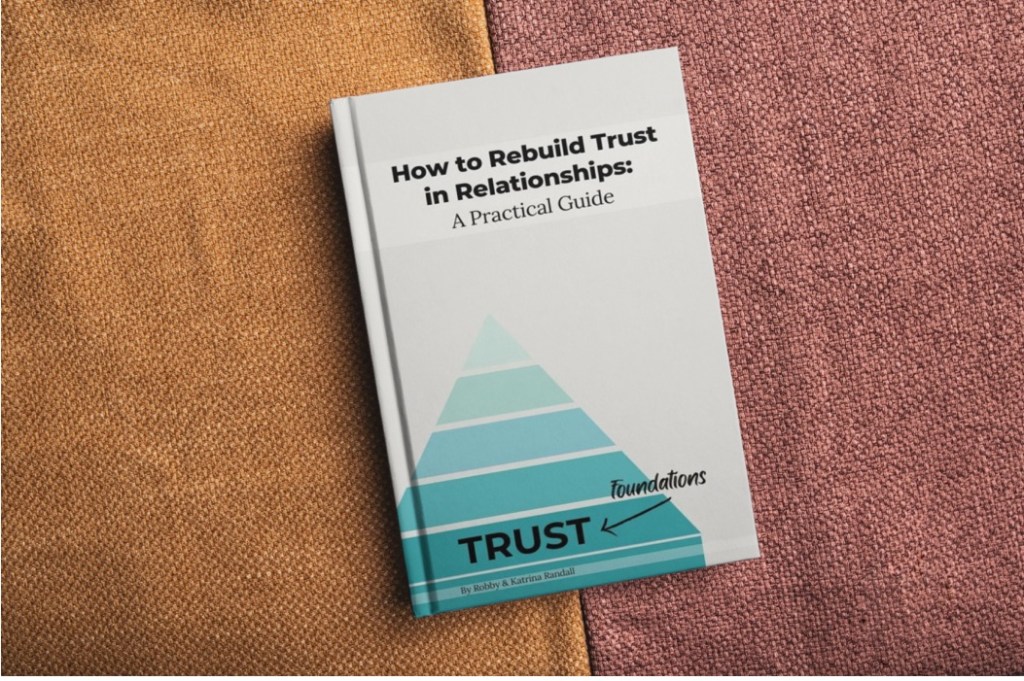
    In 2014, our church went through a series of books by Patrick Lencioni, a leadership expert and author of several business books, that outline a framework for building a healthy team culture. His insights have shaped the way I view relationships, particularly in ministry and marriage. One key concept he emphasizes is that every great team is built on a foundation of trust. Whether in a nonprofit, a sports team, or a corporate setting, trust enables teams to go further, faster. The same is true in marriage—trust is the foundation on which everything else is built. Without it, deep connection, understanding, and fulfillment become much harder to achieve. 

    But here’s the catch: trust doesn’t just happen. It takes intentional effort to build, and even more effort to rebuild when it’s broken.

    Building Trust: The Core of Healthy Conflict

    When trust is strong, it creates a safe space for deep connection and courageous conversations. But when trust fractures, even the most constructive conversations can slip into unhealthy conflict. God uses marriage, and all relationships, to grow us and form Christ in us. If the foundation of trust is not secure, it becomes harder to navigate issues that arise in a healthy way.

    I’ve written before about the importance of staying away from “false harmony” (Lencioni’s term), and how it can mask underlying issues. It’s easy to pretend everything is fine, but without trust, this facade can quickly crumble when conflict arises. Healthy conflict is not about avoiding tough conversations, but about addressing them with honesty, vulnerability, and respect. This is the trust we need to rebuild.

    The Sobering Reality: Trust Will Be Broken

    Here’s the sobering truth: trust will be broken at some point in every relationship. You may not face a “level 10 betrayal,” but as long as you’re two humans full of flesh and pride, there will be moments where trust is fractured. And that’s okay—as long as you don’t leave it unattended.

    The key is how you respond. Are you willing to face the hurt, address the issue, and work through it together? Trust is a living, breathing thing—it requires constant care and attention.

    Evaluating Trust: Are There Fractures?

    One of the ways to evaluate the health of your trust is to ask: What areas in our relationship are we anxious about having conversations? These are often the areas where trust has been broken or left unaddressed.

    During that argument with Katrina, when she said, “I can’t trust you,” something shifted in me. Out of nowhere (completely by the grace of God), I said, “Well, I guess we’ll just have to build trust then!” I didn’t know exactly what I was committing to, but I felt a resolve in my heart that we needed to rebuild. When I said yes, I had no idea what I was truly getting myself into.

    Rebuilding Trust: Our Journey

    For the next three months, Katrina and I dedicated ourselves to building trust from the ground up. We started by identifying every area where we felt hesitant to talk about. We made a list of nine areas—parenting, finances, sex, housekeeping, and more. Some of those areas felt discouraging to acknowledge. How had we arrived at this point? But we were determined to rebuild, and that was the first step toward healing.

    Through countless honest and vulnerable conversations, we slowly began to rebuild. Many of these talks were painful, as I had to face how my actions—or lack of action—had fractured the foundation of our relationship. Some of these conversations were filled with tears, but each one demanded our fierce commitment to humility and radical ownership. 

    Over time, our foundation grew stronger. We realized that rebuilding trust isn’t just about fixing specific issues; it’s about fostering a new level of transparency, vulnerability, and mutual respect.

    Moving Forward: The Power of Trust

    Today, our marriage is stronger because we’ve taken the time to rebuild trust. It didn’t happen overnight, and it took intentional effort. But that effort has allowed us to engage in healthier, more honest conversations. We’re better equipped to navigate conflicts with grace, knowing that we have each other’s backs and that trust is at the center of it all.

    Trust, like any core principle, needs constant care. It can’t be taken for granted. But when you intentionally nurture it, it becomes the foundation of everything else in your relationship. And when trust is strong, everything else becomes easier—communication, connection, and even conflict become more manageable.

    If you’re facing fractures in your own core of trust, know that it’s possible to rebuild. It starts with a willingness to acknowledge the issues, have those difficult conversations, and commit to the process of healing. Trust can be restored, and when it is, the depth of your relationship will grow stronger than ever.

    The core of trust is essential for a thriving relationship, whether in marriage, friendships, or any other connection. It takes effort to build, and it requires even more effort to rebuild when broken. But with patience, intentionality, and grace, you can restore trust and create a foundation that supports deep connection, meaningful conversations, and healthy conflict. Trust is not a one-time thing—it’s a continuous journey that, when nurtured, leads to stronger, more fulfilling relationships.

    Prayer: Lord, please give me discernment to recognize where trust may be broken in my relationships. Grant me the courage to have open and honest conversations, and help me face the painful truths with humility, vulnerability, and a deep commitment to rebuilding trust. Restore what has been fractured by Your grace, and may Your love be the foundation that guides me toward deeper connection, honesty, and mutual respect. In Jesus’ name, we pray. Amen.

    (Possible next step: Katrina and I put together a FREE downloadable guide to rebuilding trust that you can check out here) 


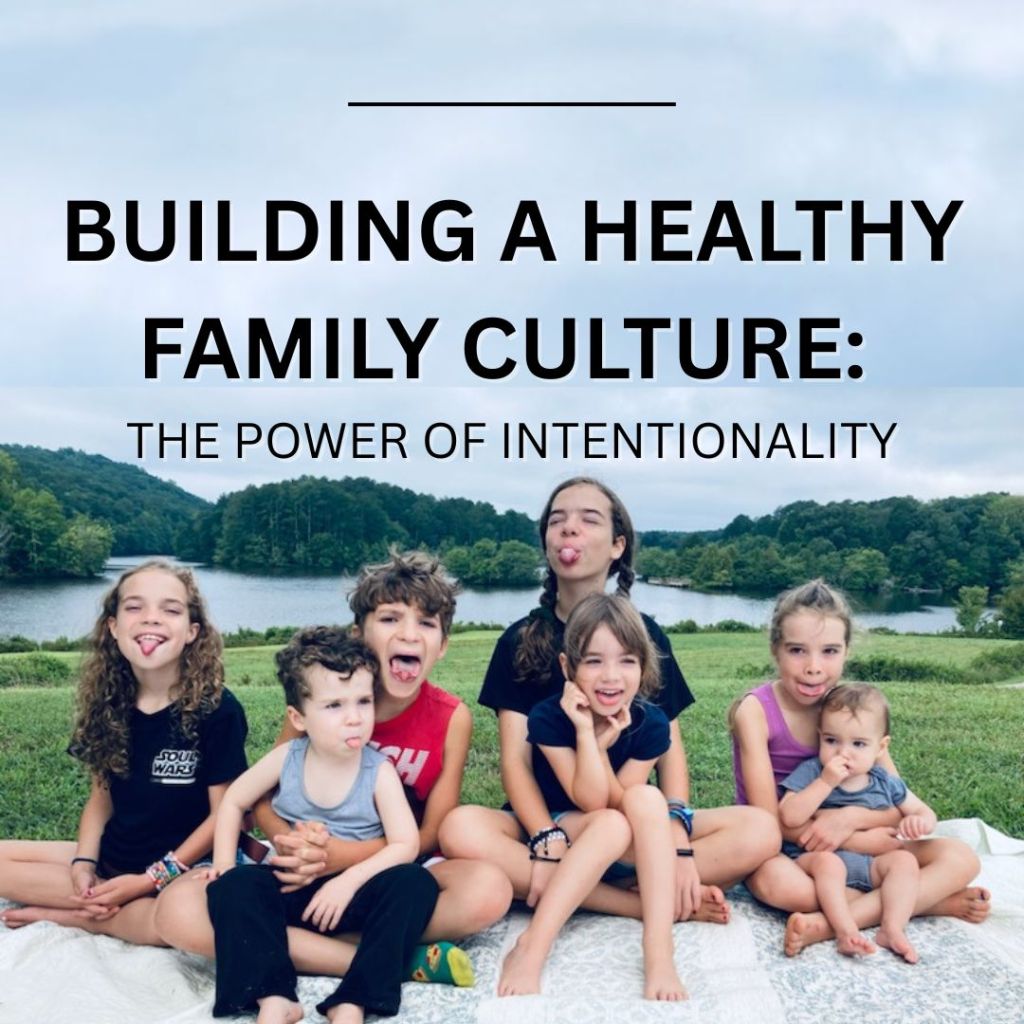
  • Building a Healthy Family Culture: The Power of Intentionality

    Building a Healthy Family Culture: The Power of Intentionality

    Have you ever walked into someone’s home and immediately felt something intangible—the warmth, the unity, the sense of belonging? 

    I know I have! I remember when Katrina and I first started having kids, we visited a family from our church. As we walked into their home, they were just finishing a family prayer time. Though their children were young, it was clear that each of them had a deep reverence for the Lord and for prayer. They said “Amen” and warmly welcomed us in.

    Throughout the evening, we observed the rich culture of their family. Their two young sons responded to me with a respectful “yes, sir” each time we spoke. Their daughters attentively engaged with our kids, allowing the adults to connect. At dinner, they held hands, prayed together, and then sang a beautiful song of worship and gratitude. Katrina and I were in awe.

    This type of family culture does not happen by accident. It’s the result of a family culture that has been cultivated over time, either intentionally or passively. Every home has a culture, whether you realize it or not. The question is: Are you shaping yours with purpose, or are you letting it form by default?

    This blog is the first in a series on Building a Healthy Family Culture. In this post, we’re starting with the foundation: Intentionality.

    A Family Culture is a Combination of What You Make Happen and What You Allow to Happen

    Family culture isn’t built overnight. It’s the result of small, consistent decisions—what you prioritize, how you handle conflict, the tone of your conversations, and even the rhythms of daily life. Some of these elements are things you deliberately set in motion, while others creep in simply because they weren’t actively addressed.

    For example, if you make a habit of eating dinner together, having deep conversations, and praying as a family, you’re intentionally shaping a culture of connection and faith. On the other hand, if screen time slowly takes over family interactions, or if busyness keeps everyone moving in different directions, a culture of disconnection forms—whether you meant for it to or not.

    Your family culture is happening right now. The question is: Is it forming into the culture that you want?

    The Danger of Passivity

    The truth is, if you’re not actively building your family culture, something else is doing it for you—whether it’s external influences like media and peers or simply the natural drift of life’s demands. Without intention, it’s easy to fall into patterns that don’t align with your values.

    • Maybe conflict in your home tends to escalate rather than resolve, and that pattern is becoming the norm.
    • Maybe gratitude isn’t modeled often, and complaining has taken root.
    • Maybe busyness has replaced quality time, and relationships feel distant.

    Passivity isn’t neutral—it’s the open door through which unhealthy patterns enter and take residence. The good news? A culture left to chance can be reshaped through intentional effort.

    Considering the Long-Term Outcomes

    It’s easy to get caught up in the immediate chaos of parenting—the endless laundry, the sibling squabbles, the looming deadlines. But family culture isn’t just about today. It’s about the legacy you’re building.

    Take a step back and ask:

    • What kind of adults do I want my children to become?
    • What memories do I want them to carry from their childhood?
    • What values do I want deeply rooted in our home?

    Your answers to these questions should shape how you parent today. Yes, the stresses of the moment are real, but when you zoom out to the bigger picture, you’ll realize that every decision—how you discipline, how you speak to one another, how you spend your time—is contributing to the family culture that will define your children’s upbringing.

    Defining the Objective of Family

    If you want to be intentional about your family culture, you need to define what you’re aiming for. A vague sense of “wanting a good family” isn’t enough. What does a healthy family culture look like for you?

    Here are three key objectives worth considering:

    Offering God a Pleasant Aroma

    In Scripture, we see the idea of our lives being a “fragrant offering” to God (2 Corinthians 2:15, Ephesians 5:2). This applies to families as well. When our homes reflect love, peace, forgiveness, and faithfulness, they become a place where God is honored—not just in name, but in daily reality.

    Does your home reflect His presence? Do your interactions point your children toward Him? A family culture that prioritizes God isn’t perfect, but the way we build it—through love, grace, and faith—becomes a fragrant offering to Him. When we seek Him in both our successes and struggles, our home becomes a place where His presence is not just acknowledged, but welcomed. 

    The way we live and the culture we cultivate in our homes can rise like a sweet aroma to the Lord, bringing Him joy. Building an intentional family culture around Gospel-centered principles isn’t just beneficial for our children—it is an act of worship that pleases God.

    Long-Term Connection

    The relationships within a family should be built to last. It’s easy to assume that just because you live together now, you’ll stay connected forever—but relationships require ongoing investment.

    How do you cultivate long-term connection? (This isn’t an exhaustive list, but these are some topics. I’ll be writing about in this series)

    • Open and Vulnerable Hearts: A thriving family culture begins with hearts willing to be seen, known, and loved without fear of rejection.
    • Love Built on Foundations of Trust: Genuine love flourishes when trust is consistently nurtured through honesty, reliability, and faithfulness.
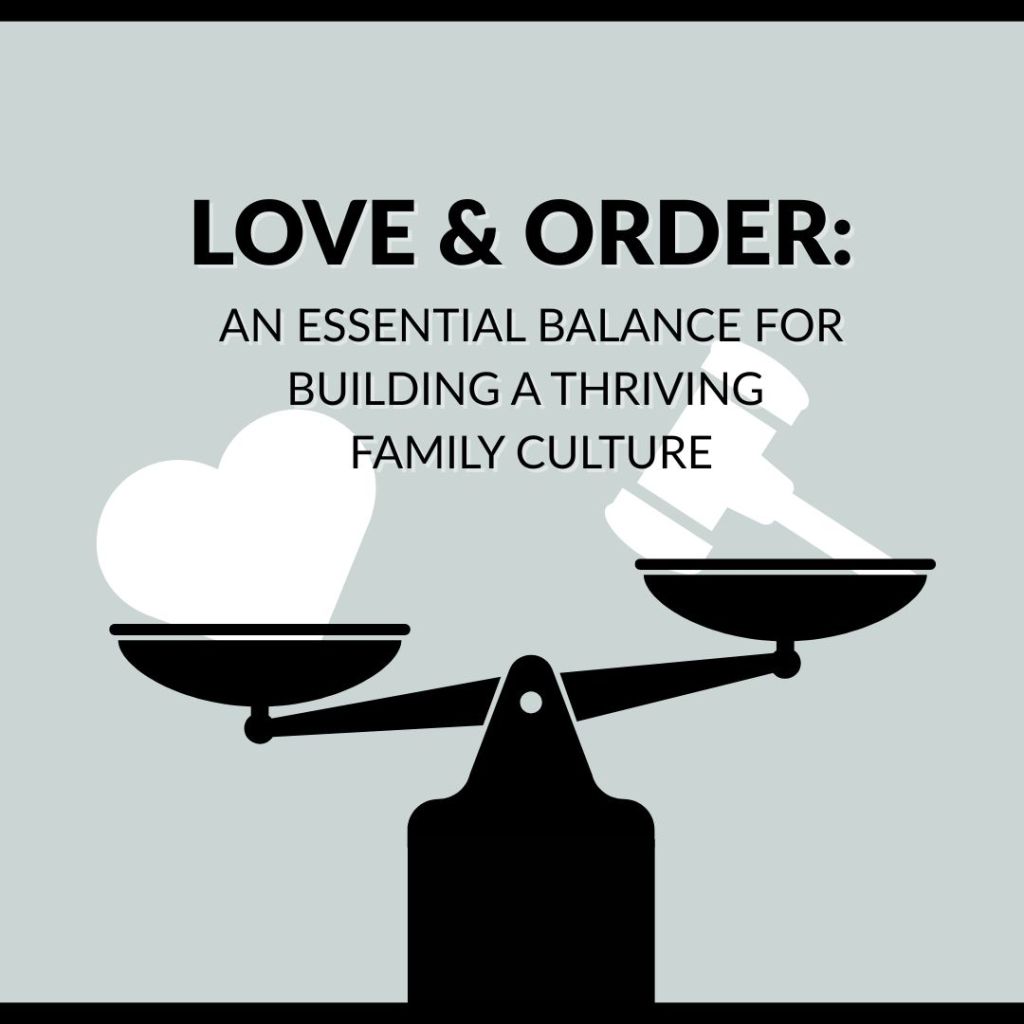
    • Love & Order: Kids cannot run a family, and parents are not meant to be cold-hearted dictators. A healthy family thrives when mutual love and respect are paired with Godly order, where parents lead with selfless love while teaching children to respect authority. This balance creates a strong family culture that nurtures growth and allows both parents and children to flourish.

    • Confession and Repentance: A healthy home embraces humility, where admitting wrongs and seeking forgiveness restores relationships and reflects God’s grace.
    • Courageous Conversations: True connection is built through honest, grace-filled discussions that address challenges, deepen understanding, and strengthen bonds.

    • Discipleship Through Family Rhythms: Building a family culture is all about discipleship. The Holy Spirit is trying to form Christ and us as parents and in our children. This can happen in isolated moments, but it has exponential power when we we spiritual practices into our family culture. 

    The goal isn’t just to raise children who respect you as parents, but to foster lifelong relationships where love, trust, and genuine friendship remain long after they leave home.

    Empowering Kids to Be Successful Adults

    Parenting is ultimately about preparing children for the world beyond your home. Success isn’t just about academics or career paths—it’s about character, responsibility, and emotional resilience. Your children won’t stay under your roof forever, but the culture you create now will shape the kind of people they become. The daily habits, values, and relationships they experience in your home will serve as a foundation for how they navigate life’s challenges. By intentionally building a home centered on faith, love, and wisdom, you equip them to thrive long after they leave.

  • Part 4: Becoming the Guide

    Part 4: Becoming the Guide

    The greatest heroes don’t just win battles—they pass on wisdom. Heroes don’t just fight battles and claim victory; they share the lessons they’ve learned along the way. Just as we were once victims or villains, transformed into heroes by God’s grace, we too are invited into the next phase of the journey: becoming guides. The truth is, every hero, no matter how strong or courageous, is in desperate need of a guide. The challenges of life are too great to face alone, and even the most heroic among us need someone to walk alongside them, offering wisdom, encouragement, and perspective. The transformation doesn’t stop at our own victory—it expands, inviting us to lead others toward their own. The greatest heroes are those who, having conquered their own battles, now show others the way.

    What Makes A True Guide?

    Guide Are Humble 

    First and foremost, guides are humble. They don’t seek the spotlight or crave recognition for their wisdom; instead, they understand that the journey is never about them. True guides recognize the cost of their own journey and, rather than boasting about their victories, they share their wisdom with quiet humility. Their ultimate goal is not to elevate themselves, but to empower others to succeed. Jesus, though fully God and in the highest place of authority, was motivated by love and selflessness. He humbled Himself, took on human flesh, and became a servant to all, offering not just wisdom but life—life to the fullest, and an invitation to live abundantly.

    Guides Are Empathic Because They Were Once Victims/Villains that Became Heroes

    A true guide’s wisdom doesn’t come from theory—it is shaped by their own lived experiences. Having walked through their own battles, they understand the weight of struggle and the power of transformation. Their past struggles don’t just make them compassionate; they give them the kind of perspective that can only be gained by enduring hardship and emerging victorious. The best guides don’t simply know the way—they understand the pain of walking it. They listen deeply, not just offering advice, but truly hearing and learning the other person’s story, pain, and journey. Their empathy isn’t superficial; it’s born from their own redemption, enabling them to walk alongside others with genuine understanding and grace.

    They Don’t Just Fix – They Call into Destiny

    A guide’s role is not to take over but to walk alongside. The journey isn’t about providing quick fixes, but about empowering others to step into their own destiny. Job’s friends got it wrong—they tried to fix him instead of simply being present with him in his suffering. The best guides don’t attempt to take control; instead, they come alongside, offering support, perspective, and encouragement. They call people out of being victims or villains and into their heroic purpose. A true guide doesn’t enable self-pity or allow others to remain stuck in their pain or bitterness. Instead, they challenge others to rise above their circumstances, reminding them that they have a part in God’s larger story. Guides call others into their true identity in Christ, helping them see that they are not defined by their past struggles but by the heroic future God has called them to embrace.

    The Power of Being Present

    The power of presence often outweighs the power of advice. A good guide doesn’t just offer advice and walk away—they remain steadfast, walking alongside others through their journey. Presence communicates more than words ever could; it conveys value, safety, strength, and courage. Too often, we underestimate the profound impact of just being there with someone in their struggle. Looking someone in the eye and affirming the glory of God that you see in them could transform their life, reminding them of their worth and calling. For parents, spiritual mentors, or close friends, presence is one of the most valuable gifts we can offer. Jesus Himself demonstrated this beautifully by walking with His disciples, living life with them, not simply teaching them from afar. His presence empowered them in ways words alone never could.

    Guides Leave the Responsibility with the Hero

    A true guide equips, encourages, and supports, but they cannot walk the journey for someone else. No matter how much wisdom they offer, the responsibility to step forward ultimately belongs to the hero. Even Jesus, after teaching and mentoring His disciples, did not force them to follow Him—He left them with the responsibility to spread the Gospel and carry out their calling. A guide must resist the temptation to control or dictate outcomes. Instead, they empower others to make their own choices, trusting that God is at work in their journey. True transformation happens when a person takes ownership of their path, and a good guide knows that their role is to inspire, not to steer.

    Stepping Into Your Role as a Guide

    The journey from victim to villain to hero doesn’t end with our own transformation—it finds its fullest meaning when we become guides for others. And the truth is, it doesn’t matter what age you are; you can be a guide to someone in their story. Being a guide isn’t reserved for the experienced or the wise—it’s part of being human, and even more so, part of being a Christian. Loving and preferring others means walking alongside them, offering encouragement, wisdom, and presence. The beauty of this journey is that you don’t have to choose between being a hero and being a guide. At any given moment, you can be both—still needing guides in your own life while also guiding others toward the calling God has for them.

    Now it’s your turn.

    Who is someone that God has placed in your life that you can be a guide to? What value—whether wisdom, encouragement, or simple presence—can you bring to their journey? And how might you shift your mindset to be more of a guide rather than slipping into the roles of victim or villain? Your story and experiences are not just for you—they are meant to be shared so that others can rise into the heroes they were created to be.

    Becoming an Intentional Father

    Fathers! God has entrusted you with something incredibly special, something sacred. He has placed in your hands the stewardship of His image: first, by forming His image-bearers (yes, those wild kids of yours), and second, by living as an image-bearer yourself, revealing and representing Him to your family. And beyond that, you’re responsible for shaping…

    Shepherding Your Child Through Porn Exposure

    When the Enemy Hunts Your Kids: Teaching Them to Run to Jesus This was a question from a recent parenting seminar we hosted: What tips can you give about navigating your child being exposed to pornography and helping them not have that become a stronghold in their life? – Every parent who loves Jesus longs…

    The Power of Home: Shaping Identity in a World That Wants to Deform It

    One of my mentors once told me that our deepest longing is the longing for home. I see this echoed in culture when Dorothy in The Wizard of Oz says, ‘There’s no place like home,’ and when countless décor signs repeat the simple phrase, ‘Home Sweet Home.’ When I reflect on what it means for…