There’s something sacred about those early days of parenting. The house is full of wonder. You’re all in—fully present and full of anticipation for the person your beautiful baby will one day become. You are set to parent with intentionality. You are doing the small things that you believe are going to help shape their sense of identity. You speak gentle words of wisdom over your one-year-old kid while buckling them into the car seat. Maybe you’ve already taken them on their first fishing trip, or proudly introduced them to your favorite pour-over coffee shop. You are striving to make every moment feel purposeful and full of meaning.
But somewhere between that adorable first birthday and the chaos of toddlerhood, something shifts.
Suddenly, your sweet little kid discovers they have a will. A strong one. And it seems to rise up without warning. Between age three and five, that once-loving home starts to feel like a battleground. You and your spouse find yourselves trying to renegotiate authority—as if the throne of parental leadership has been quietly overthrown by a pint-sized revolutionary in Paw Patrol pajamas.
Parenting is one of the most rewarding but also challenging tasks in life. As parents, we aim to shape our children into thriving adults who are confident, compassionate, and capable of navigating the complexities of the world.
However, the journey of parenting involves much more than simply providing for physical needs; it requires intentionality, wisdom, and a solid foundation in both love and order. These two elements—mutual love and respect, and Godly order—are essential pillars in creating a healthy family culture where both parents and children can thrive. In this article, we will explore how these principles can help build a family that grows closer together while fostering an environment of trust, growth, and success. (This article is part of the Building A Healthy Family Culture series – Read part 1 here).
Mutual Love and Respect: The Foundation of Healthy Leadership
(This applies to all types of leadership—not just in the home—but that’s a topic for another article)
In many cultures, leadership is often viewed as a top-down, authoritarian structure. The leader gives orders, and those beneath them obey. This often can be cold, impersonal and even dehumanizing. While this might work in certain contexts, it is not the best model for parenting. Instead, leadership within the family should be based on mutual trust, love, and respect. A healthy family dynamic thrives on collaboration and understanding, with both parents and children acknowledging each other’s value.
In leadership, trust is key. Leadership should not be seen as a dictatorship but as a relationship built on mutual respect. Whether in a workplace or in the home, good leadership does not operate in isolation; it invites cooperation and communication. When trust is established, it fosters an environment where both parties can thrive and grow. Parenting should be no different.
As parents, it is essential to treat our children with respect and dignity. They are human beings with the ability to understand, process, and grow. Far too often, children are treated as if they are incapable of understanding the world around them, which leads to miscommunication and a lack of mutual respect.
A Green Thumb Lesson: What Plants Teach Us About Parenting
Katrina and I both don’t have a green thumb. Every plant that’s come into our lives has ended up shriveled and dry. But our oldest daughter, Shalom, has taken an interest in botany. Last time she counted, she had over 50 plants scattered around the house.
A mentor of mine once used the analogy of a thriving plant: for a plant to grow, it needs an environment that nurtures growth. Kids need the same—love and safety to grow into thriving adults.
Every plant has basic needs like sunlight, water, and good soil.
Children thrive when their basic needs for sleep, nutrition, safety, and connection are consistently met. These foundational needs create a sense of stability that lets their hearts and minds grow with confidence. When we prioritize their physical and emotional well-being, we give them the security they need to explore, learn, and relate to others in healthy ways.
When I asked Shalom how she does such a good job caring for plants, she said, “It depends on what kind of plant you’re talking about. If the leaves are yellow, you’re watering it too much. If they’re droopy, you’re not watering enough.” Simple but profound. There are basic needs—but the way those needs are met depends on the plant.
That’s exactly how parenting works. To create a place where kids can grow into thriving adults, we need to understand their individual needs and be attentive to when they need more or less of something.
Each child is wired differently, with unique temperaments, sensitivities, and ways they experience love. Learning who they are—what calms them, what excites them, and what challenges them—helps us respond with wisdom, not a one-size-fits-all approach. When we adjust how we parent to meet their individual needs, we build a home where they feel seen, safe, and free to become who they were made to be.
Parenting also means paying close attention to the signs that something isn’t working. Meltdowns, withdrawal, or constant testing often point to needs that aren’t being met. Sometimes kids need more structure, connection, or rest—and other times, they need less stimulation, pressure, or freedom. When we slow down and notice these signals, we can adjust how we respond to better support their growth and well-being.
The Tension Between Nurture and Order
Mutual love and respect are also about understanding the role children play in the family dynamic. They are not passive participants but active members of the family system. By teaching them the importance of respect and love for others, we are helping them develop emotional intelligence and social awareness. As parents, we need to aim to build a culture in the home that encourages healthy communication, empathy, and self-awareness.
However, there is a risk in leaning too heavily into mutual love and respect without also establishing boundaries. If you are like me, in an attempt to create an environment of trust and love, it can be easy to inadvertently fall into the trap of over-accommodating your children’s desires, leading to a lack of order and structure in the home.
In the name of love, we start making little compromises. We let things slide, give in to tantrums, or avoid hard conversations—telling ourselves it’s just a phase, or that connection matters more than correction. And while our hearts are in the right place, a subtle shift begins to take root. Without realizing it, the pursuit of a warm, nurturing environment starts to come at the cost of order and consistency. The home is still full of affection, but even in these early years, it can become marked by power struggles, unmet expectations, and constant negotiation.
Eventually, the absence of order can become so exhausting that we swing in the opposite direction—toward fear, control, and rigid authority. What began as a pursuit of connection now feels like a fight to regain control. But the goal isn’t to rule the home with an iron fist, nor is it to let our kids run the show—it’s to create an environment where children feel loved, valued, and secure within healthy boundaries.
Godly Order: Leading with Purpose and Authority
Love and respect are the heart of any strong family, but having a sense of order helps things run smoothly. Parenting isn’t just about caring deeply for our kids—it’s also about leading them well. Our job is to help them grow into responsible, respectful, and faith-filled people. Just like our walk with God includes both love and trust in His authority, parenting involves that same mix of care and guidance.
The concept of “order” in the home is rooted in the understanding that God has entrusted parents with the responsibility of raising children in a way that honors Him. This includes not only providing for their physical and emotional needs but also teaching them about God’s ways and establishing boundaries that promote growth and understanding. Katrina and I explain this idea using a biblical principle we call “Godly Order.”
God didn’t create the world randomly—He created it with purpose and order. In Genesis 1, we read that the earth was formless and empty, but as God spoke, order began to take shape. We see that order all throughout creation. One important part of that order is how we understand authority, especially in parenting. Authority and obedience aren’t about control—they’re about love and respect.
Think about our relationship with God. Can we tell Him what to do? Of course not. But can He tell us what to do? Absolutely. Still, He’s not distant—He invites us to come to Him, to ask, to seek, and to speak freely. That’s the kind of relationship we want to model with our kids.
An important aspect of Godly order is the ability to say “no” when necessary. In the same way that God sets boundaries for us, parents must also establish boundaries for their children. This can sometimes be difficult, especially when children test limits, but it is essential for their development. Teaching children that “no” means “no” helps them learn to respect authority and understand that there are consequences to their actions. This structure creates a safe environment where children can thrive because they know their boundaries, and they can trust that their parents will keep them safe.
In the same way that we’re called to honor and obey God, parents are meant to model that same kind of respect for authority in their own lives. When children see us submitting to God’s guidance, it helps them understand why they’re called to listen and obey as well. One practical way to teach this is by explaining that just as we can’t tell God what to do—but we can ask Him—our kids can’t demand things from us, but they can ask. Sometimes God answers yes, and sometimes He doesn’t. It’s the same with parents. This simple truth teaches both humility and trust, and it mirrors the way God invites us into relationship with Him.
Sadly, many homes today lack this kind of intentional structure. When kids are in charge and parents hesitate to set boundaries, it often leads to confusion, stress, and even conflict. But when parents lead with purpose and love—creating clear expectations and healthy limits—children feel more secure. They learn to trust their parents, which helps them grow in confidence and respect. It also prepares them to live well in the world, where authority figures like teachers, coaches, and bosses will be part of their everyday lives.
Balancing Love, Respect, and Order in Parenting
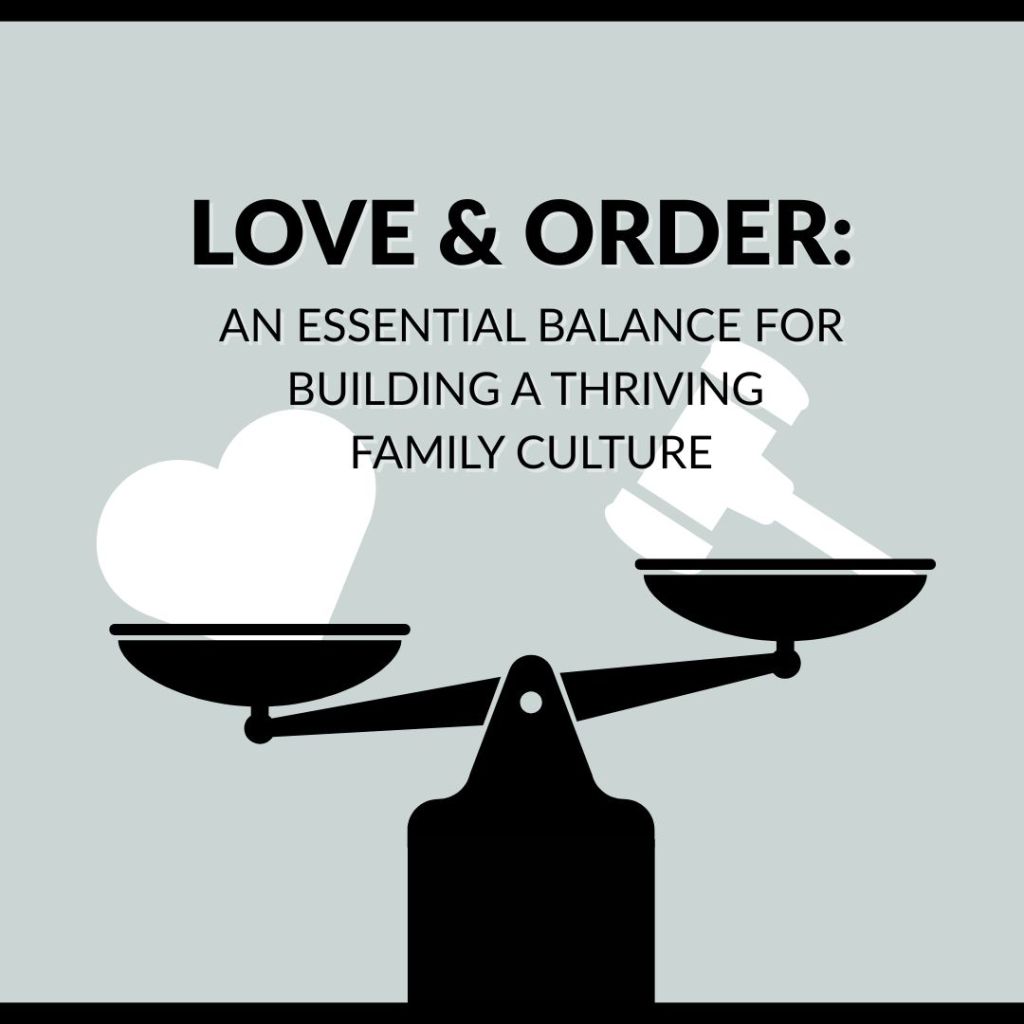
The relationship between love and order is a delicate balance. When we focus too much on love and respect without setting clear boundaries, we risk creating a home without structure, which can lead to confusion and insecurity. On the flip side, if we emphasize Godly order without a foundation of love and respect, it can create a culture of fear and rebellion—where children follow the rules but miss the heart behind them.
The key to a thriving family culture is weaving both love and order into everyday parenting. When children feel deeply loved and respected and know there are clear, consistent boundaries, they learn to value both relationships and responsibility. This kind of environment helps them grow into confident, compassionate, and wise adults who can navigate life well.
((Kids don’t stay the same, and neither should our parenting. As they grow through different stages, our approach has to grow with them. We’re in the process of writing down what we’ve been learning along the way – more articles to come))
 The Randalls
Leave a comment